
IRISH PARIS
Artists
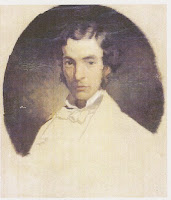
Before the action moved further north to Montmartre, the ‘bohemian artist’ area of Paris was La Nouvelle Athènes, an area that roughly encompasses a part of the 9th arrondissement between l’Eglise de la Trinité and Pigalle. It is here that Nathaniel Hone the Younger (born in Dublin in 1831) landed when he came to study art in Paris in the early 1850s. Hone frequented the famous artist colony that formed in Barbizon near Fontainbleau and then to a smaller one not far away in Bourron-Marlotte before returning to Ireland in the early 1870s.
Hone was a trailblazer for a steady stream of Irish artists who descended on the French capital in the latter half of the 19th century. Perhaps one of the most enigmatic was Aloysius O’Kelly, who arrived in Paris to study art in 1874, the same year as the first Impressionist exhibition. O’Kelly had some modest success as an artist during his years in France, with one of his paintings exhibited at the 1884 Salon and his sketches appearing in periodicals. O’Kelly had close contacts with Irish nationalist circles in Paris. But his brother James, who went to Paris in 1863 to study sculpture, had even closer links, becoming a member of the Supreme Council of the Irish Republican Brotherhood following a fantastical stint in the French Foreign Legion. After undertaking journalistic assignments to Sudan and moving to the US, Aloysius O’Kelly apparently turned up again in Paris in 1895 under the pseudonym of Arthur Oakley.
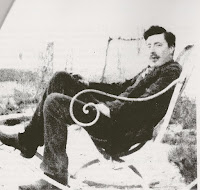
Some of Ireland’s most famous artists studied in Paris later in the 19th century, mostly at a handful of studios such as the Académie Julian and the Académie Colarossi. Many completed their artistic education by joining an artistic colony somewhere outside Paris. Such was the case of John Lavery (born in Belfast in 1856), who joined the colony at Grez-sur-Loing, south of Paris, where he befriended another Irish artist, Frank O’Meara. Roderic O’Conor (born in Co. Roscommon in 1860) also went to Grez-sur-Loing, before going to Pont-Aven in Brittany, where a colony had formed around Paul Gauguin. O’Conor spent most of his life in France and for around 30 years after 1904 was a feature of the artistic scene in Montparnasse (described by one art critic as “a dingy suburb enlivened by English and American painters”).
Paul Henry (born in 1876) left Belfast for Paris in 1898, with in his own words, “only a scant handful of regrets”. Like many others, he studied at the Académie Julian, where he met his wife, Grace Mitchell. The couple’s work was included in the ‘Art irlandais’ exhibition organised by Maud Gonne in 1922, although by that stage they had long left Paris for London and then Ireland.
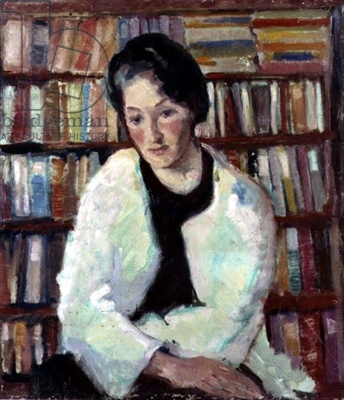
Then there was the long line of Anglo-Irish woman artists. These included Evie Hone (born in Dublin in 1894), a relative of Nathaniel Hone the Younger, and her inseparable companion in Paris, Mainie Jellet (born in Dublin in 1897), whose father was a Unionist MP. Hone and Jellett were credited with importing the techniques of Cubism and French modernism into Ireland during the 1920s. Other generally comfortably well-off woman artists of Anglo-Irish stock who studied in Paris included Lady Beatrice Glenay, Constance Gore-Booth, May Guinness, Sarah Purse, Mary Swanzy and Edith Somerville (who achieved greater fame as part of the author duo behind ‘Some Experiences of an Irish RM’).
Undoubtedly the most famous of the breed was Eileen Gray (born in Enniscorthy in 1878) who spent most of her life in France, having first arrived to study at the Académie Colarossi at the dawn of the 20th century. Gray was a creature of the 6th arrondissement, still one of the most chic (and tourist infested) areas of the Left Bank, buying a substantial apartment for herself at 21 rue Bonaparte and renting work studios in the immediate vicinity. For all the high esteem now heaped on Gray’s design work and furniture, she has no marked burial spot. Her ashes were placed in a niche at the Columbarium in Père Lachaise when she died in 1976. But with nobody to renew the lease, the authorities took back ownership and Gray’s ashes were disposed of otherwise a few years later.
William Orpen counts among the ‘bad boys’ of (Anglo-)Irish art who sowed their oats in Paris. Orpen (born in Dublin in 1878) landed himself the position of official war artist on the Western Front during World War One. The job did not prove too onerous, leaving much time for excursions to Paris, where he engaged in heavy drinking, womanising and establishing a love nest with his young lover, Yvonne Aubicq (who, naturally enough, Orpen was careful not to mention in his war memoir, since he was married at the time). Orpen was commissioned to paint the proceedings of the Peace Conference in Versailles and painted the portraits of several dignitaries, including Woodward Wilson.

A more recent ‘bad boy’ was Michael Farrell (born in Co. Meath in 1940) who spent years living and working at La Ruche (the beehive), a well-established, but decrepit, artist colony in an unfashionable part of the 15th arrondissement. Farrell’s many years in Paris were characterised by his drinking and general fecklessness (“Little was coming in, a lot was going out”), which led to unbearable tensions with his wife and children. His art frequently dipped into Irish connections with France—for example, his series entitled ‘Madonna Irlanda: the very first real Irish political picture’, which played on François Boucher’s saucy 18th-century painting of Marie-Louise O’Murphy, or ‘La fête’ (a painting that now has pride of place at the Irish embassy in Paris), which depicts James Joyce and fellow Parisian resident Pablo Picasso.
 IRISH PARIS