
IRISH PARIS
Composers and Musicians

Paris was not only the epicentre of art and literature in the 19th century, it was also a Mecca for musicians. But it was not necessarily the search for musical inspiration that brought poet and lyricist Thomas Moore (Dublin, 1779) to the city in 1819. Rather, he had had to flee England when deemed liable for money embezzled in a complicated affair involving the British admiralty. He was to lie low in Paris, with his family, for the next three years. For a time, he lived in a ground-floor apartment in rue des Victoires but, ironically enough, decamped because of incessant piano-playing on one of the upper floors. He moved to a single house with a garden on modern-day Avenue Montaigne (where both these things would be unthinkable today) before being invited by a wealthy family to stay at their property on the heights overlooking the south-west of the city. Moore led a busy social life, meeting travellers to Paris like Maria Edgeworth and William Wordsworth, and in 1821 organised a St. Patrick’s Day dinner for about 60 guests at the Cadran Bleu restaurant on the Boulevard du Temple. Finally, in November 1822, he crept back to England when the all-clear was sounded regarding his legal difficulties.
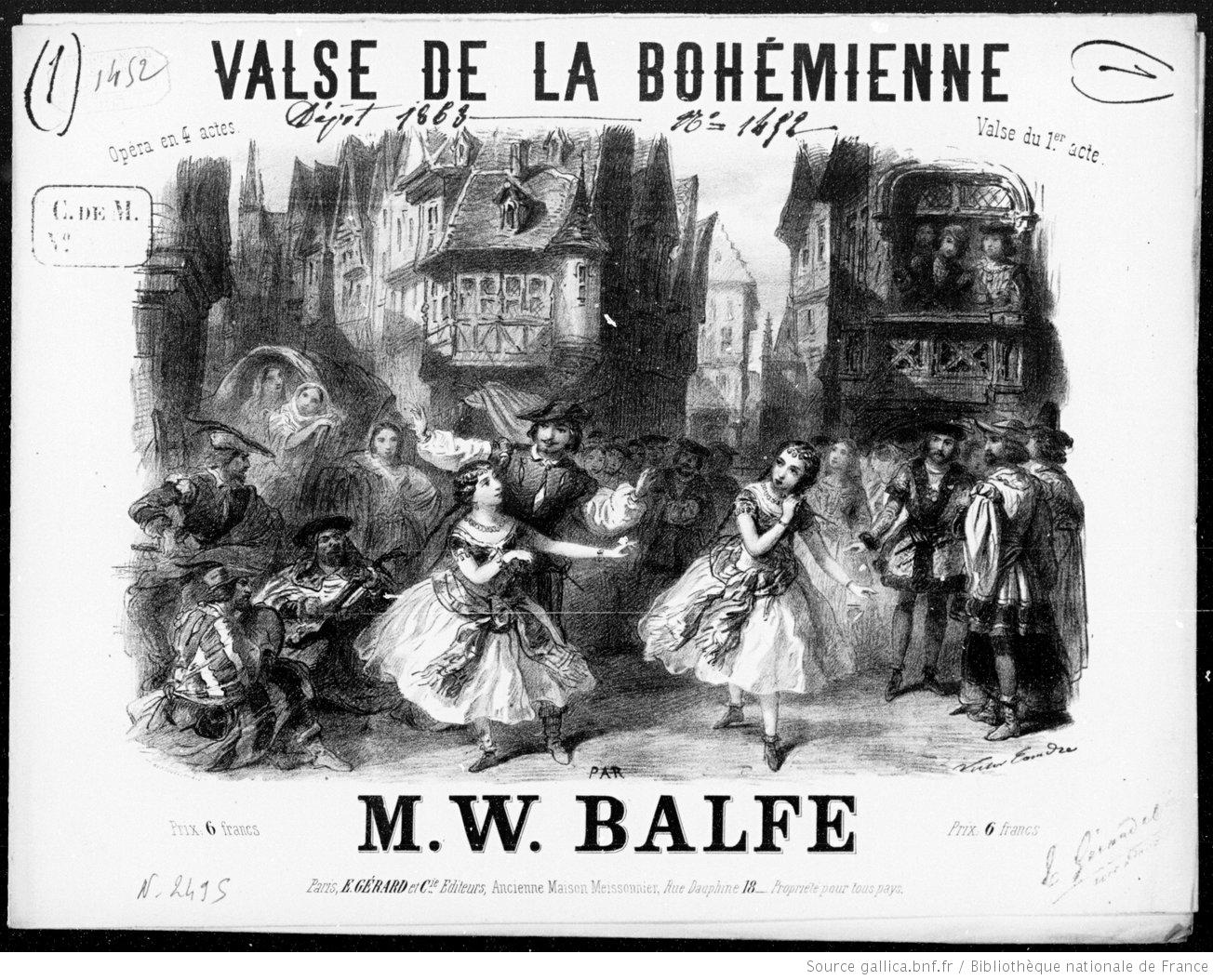
Less than five years later, in early 1827, came composer Michael William Balfe’s (Dublin, 1808) first substantial stay in Paris. He met the Italian composer Gioachino Rossini, who was impressed enough by the Irishman to offer him the role of Figaro in his opera, the Barber of Seville, at the Comédie Italienne. Balfe was again in Paris in 1837, taking an apartment in the same rue de Victoire where Thomas Moore had unhappily stayed 17 years earlier. During a stay in Paris a couple of years later, Balfe met up with his friend George Alexander Osborne, also an Irish composer (Limerick, 1806) and premiered his much-acclaimed comic opera Le Puits d’Amour at the Opéra Comique. More Parisian success followed, with several French productions of one of his best-known works, The Bohemian Girl. Balfe, who also wrote three light operas originally for Paris theatres, was awarded the Legion of Honour in 1870.
The Irish can also claim credit for creating a Parisian musical dynasty. Pianist and music teacher Joseph Kelly (Dublin, 1804) arrived in Boulogne-sur-Mer in around 1823. He and his family moved to Paris about 12 years later, for a time living in the same building as the German poet Heinrich Heine. Three of Joseph’s sons became notable composers and musicians and changed their names from ‘Kelly’ to ‘O’Kelly’ in the mid-1850s, possibly to emphasis their Irish identity. The best known, also called Joseph, composed 10 operas, three cantatas and numerous songs. One of Joseph junior’s teachers was the aforementioned George Osborne. Joseph was a prominent member of the ‘Anciens Irlandais’ group, presided over by John Patrick Leonard, and he wrote a number of pieces of Irish interest, including one called simply ‘Air irlandais’. Two further generations of O’Kelly musicians followed. They included choirmasters at prestigious Parisian churches, piano makers and orchestral musicians.
 IRISH PARIS