
IRISH PARIS
Men of the Enlightenment
After the Treaty of Limerick in 1691, numerous Catholic landowners and soldiers who had supported King James II fled to France, with a large number electing residence in Saint Germain-en-Laye, just outside Paris, where James established his court in exile. They would have found a number of Irish bankers already established in Paris willing to look after their financial affairs, of which probably the most prominent was Daniel Arthur (born around 1620 in Clare/Limerick). Arthur was well connected with James’ court in Saint-Germai-en-Laye, with two of his daughters marrying Jacobite officers. Scions of Arthur Daniel continued the banking tradition into the 18th century, cornering a profitable market in the management of British financial interests on the continent.
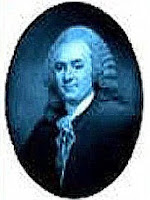
Other Irish bankers in Paris included another Munsterman, Richard Cantillon, closely connected with Daniel Arthur, who became banker to the British ambassador in Paris. Cantillon had a younger second cousin of the same name that went on to achieve some fame as an economist. The younger Cantillon (born in Ballyheigue in Co. Kerry in the 1680s) took over and expanded his cousin’s banking business in France, delved in the wine trade and in 1722 married Mary Walshe O’Mahony, daughter of a fellow Kerryman. The younger Richard Cantillon made a fortune speculating in South Sea Company shares until the bubble burst in 1720s. His fortunes took a second hit in 1728 when he was briefly dumped in prison. Threatened by legal proceedings in Paris, Cantillon retreated to London, where he died in a fire in 1734 (although one author believes the incident was a cover-up designed to enable the Irishman to escape from his legal and financial problems).
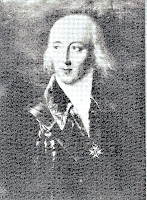
Patrick d’Arcy was the offspring of that old Catholic nobility that traditionally turned to France for the kind of opportunities it was denied in Protestant-dominated Ireland. D’Arcy (born in Co. Galway in 1725) was sent to his Jacobite uncle in Paris in 1739, when he was 14. He had an aptitude for science and maths, and in 1749 was elected to the French Academy of Sciences. Before then, D’Arcy had been aide-de-camp to Marshal Maurice de Saxe at the battle of Fontenoy in 1745 and a year later had been captured and briefly imprisoned by the British on a Jacobite mission to Scotland. In between publishing numerous scientific papers, D’Arcy made a fortune from his mining interests and became well known for the help he provided to Irish exiles in Paris.
 IRISH PARIS