
IRISH PARIS
Writers and Journalists I
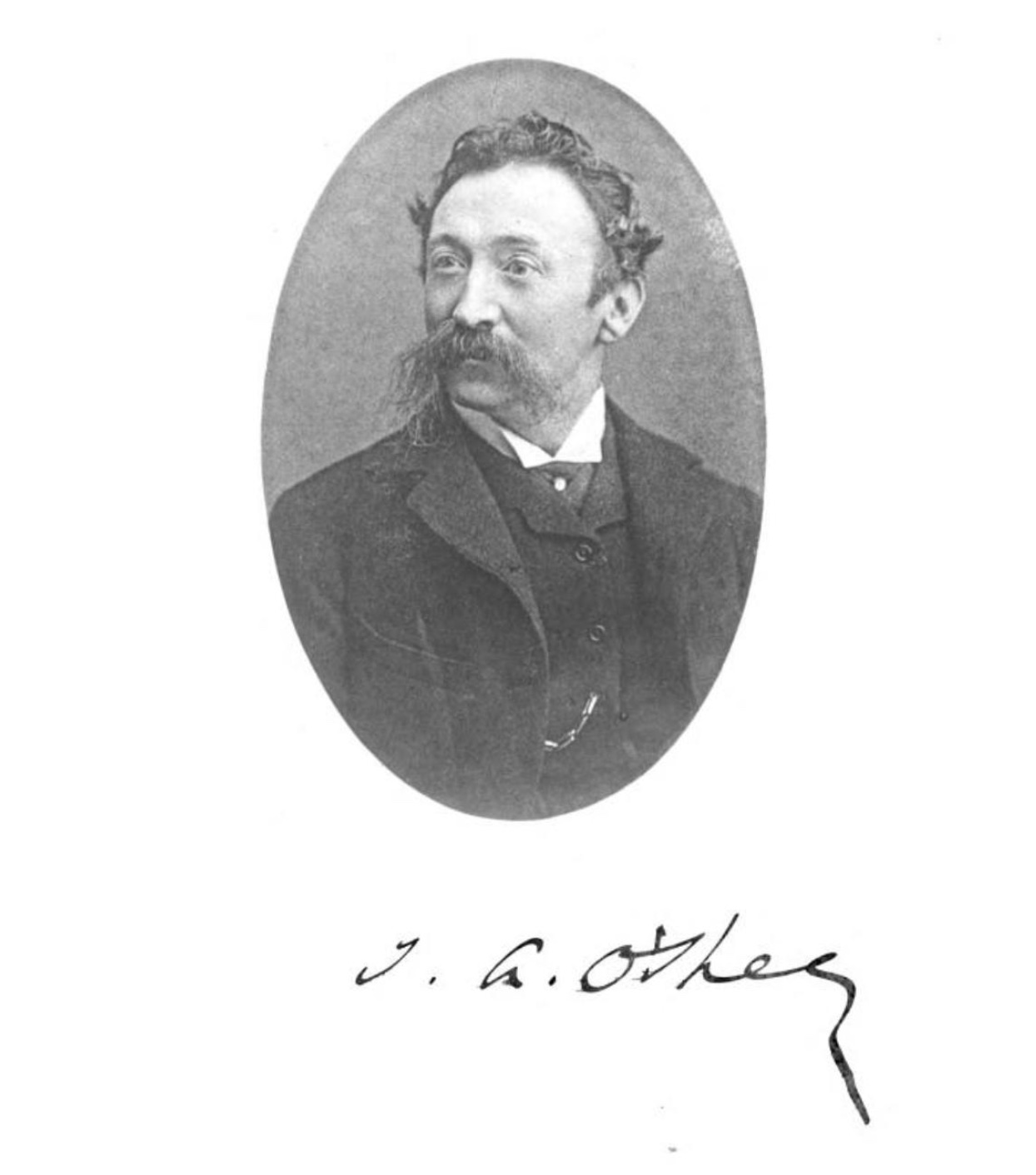
Foreign correspondent John Augustus O’Shea (like Sterne, a Tipperary native) went to Paris with a vague notion of studying medicine around the time of the Great Exhibition of 1867. He founded rough lodgings with a bunch of other young Irishmen at the Pension Bonnery, behind the Panthéon. Mixing with Irish political exiles like James Stephens, John Mitchel and Edmond and William O’Donovan, O’Shea landed jobs as Paris correspondent for newspapers that mostly “paid their journalists in compliments”. He found a more reliable employer in the form of the London Standard, for which paper he covered the Franco-Prussian War and endured the Siege of Paris in 1870-1871 along with William O’Donovan, who also witnessed the bloody repression of the Paris Commune a few months later.

George Moore (born in Co. Mayo in 1852) came to Paris a couple of years later (along with his valet), ostensibly to study art. Moore, who James Joyce described as a “genuine gent/that lives on his property’s ten per cent”) soon gave up on his artistic pretensions, but ingratiated himself with the rowdy intellectuals who congregated in the bars of La Nouvelle Athènes district and came to know the likes of Camille Pissarro, Edgar Degas and Edouard Manet, with the latter painting several portraits and sketches of the Irishman. Moore chronicled his bohemian lifestyle in Paris in the 1870s in books such as ‘Confessions of a Young Man’ but had to leave the city in 1879 when the rental income from his estate in Mayo dried up with the outbreak of the Land War.
Moore might have crossed paths with Oscar Wilde, who first visited Paris in 1876, and stayed in the city for various periods in subsequent years. In his years of fame, Wilde rubbed shoulders with the leading intellectual lights of the day in Paris, including Edmond de Goncourt, who described him as “an individual of doubtful sex who talks like a third-rate actor and tells tall stories”. But Wilde was a broken man when he arrived in Paris in 1897 after his release from Reading jail. Penniless, he stayed on and off at the Hôtel d’Alsace in the rue des Beaux Arts and after a deathbed conversion to Catholicism in 1900 was buried as a pauper in Bagneux in the Parisian suburbs.
William Butler Yeats had somewhat better luck in Paris, although not complete success. On his first visit in 1894, he met fellow poet Paul Verlaine and saw the ground-breaking play ‘Ubu Roi’, which had a cathartic effect on his own ideas for the theatre. Two years later, he stayed in the mythical Hotel Corneille in the street of the same name, along with John Millington Synge, and on New Year’s Day 1897 accompanied Maud Gonne to the inaugural meeting of the Association irlandaise in Rue des Martyrs. But despite repeated trips to Paris from London, Gonne repudiated Yeats’ marriage proposals, plunging him into depression. Years later, in 1922, Yeats gave a talk at the Irish Race Congress held at the Grand Hotel, beside the Opéra Garnier.
As for Synge, he first arrived in 1895 with a vague idea of pursuing university studies. He also frequented Maud Gonne’s Association irlandaise, but quickly decided Gonne’s strident nationalism was not for him. By the summer of 1897, Synge had developed serious health problems. He still moved to and fro between Ireland and Paris, until he finally gave in to his mother’s entreaties to move back permanently to Ireland in 1903—but not before meeting James Joyce in the Hôtel Corneille, where the two “had many quarrelsome discussions”, according to Joyce’s brother.
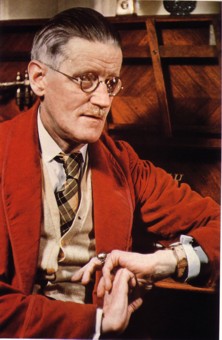
James Joyce had arrived in Paris in December 1902 to study medicine but left in April of the next year after receiving a telegram from Dublin that read “Mother dying come home father”. A more permanent stay began in July 1920 after he left Trieste. In the space of 19 years, Joyce lived at the same number of addresses in the city, including numerous short stays in hotels. One of the first safe havens Joyce found was at the ground floor flat of French writer Valéry Larbaud in the rue Cardinal Lemoine. In the 1990s, the residents’ association erected a plaque to Joyce, described as an “écrivain britannique d’origine irlandaise”, and Stephen Joyce, James’ grandson, commenced a guided tour of Joycean Paris there by telling a grumbling concierge to “get lost”. James Joyce left Paris one last time in December 1939, after the start of the war. Joyce’s papers, left behind in a flat in rue des Vignes in the 16th arrondissement, were retrieved and placed in safety by Paul Léon, Joyce’s factotum, in 1940-1941. Léon himself, born a Russian Jew, was arrested in August 1941 and died in Auschwitz the following April.
James Stephens (Dublin, 1882) was already quite established as a writer when, on the advice of friend, he travelled to Paris in May 19013 to broaden his intellectual horizon. He quickly found an apartment that he was to keep until his death in 1950 at 11, rue Campagne Première in Montparnasse and came to know Yeats and Maud Gonne. Years later, her son, Seán McBride, remembered Stephens taking “me out occasionally for long walks and ice cream. I was a fanatical stamp collector…and he occasionally brought me into a frightfully expensive second-hand stamp shop, where he gave me free run to buy what I wanted in stamps.” Helped by the conviction that they were born on the same day, Stephens hit it off with Joyce, who jokingly suggested that Stephens should finish Finnegan’s Walk should he himself be unable to do so.

Arthur Power was another Irishman who hung around Joyce in the 1920s, later publishing a book called Conversations with James Joyce. Power, who was the art critic for the Irish Times, also came to know the artist Ossip Zadkine and interviewed Amadeo Modigliani shortly before the latter’s death in 1920 (one of the latter’s portraits is entitled ‘La belle irlandaise’.) Power regularly met the Joyce family in Paris during the 1920s, and was especially appreciated by Nora Joyce for his moderate drinking habits.
 IRISH PARIS